The 21 Card Trick, Explained Step by Step
Learn the classic 21 card trick from start to finish — how to deal, gather, and reveal with confidence, plus why the math always works.
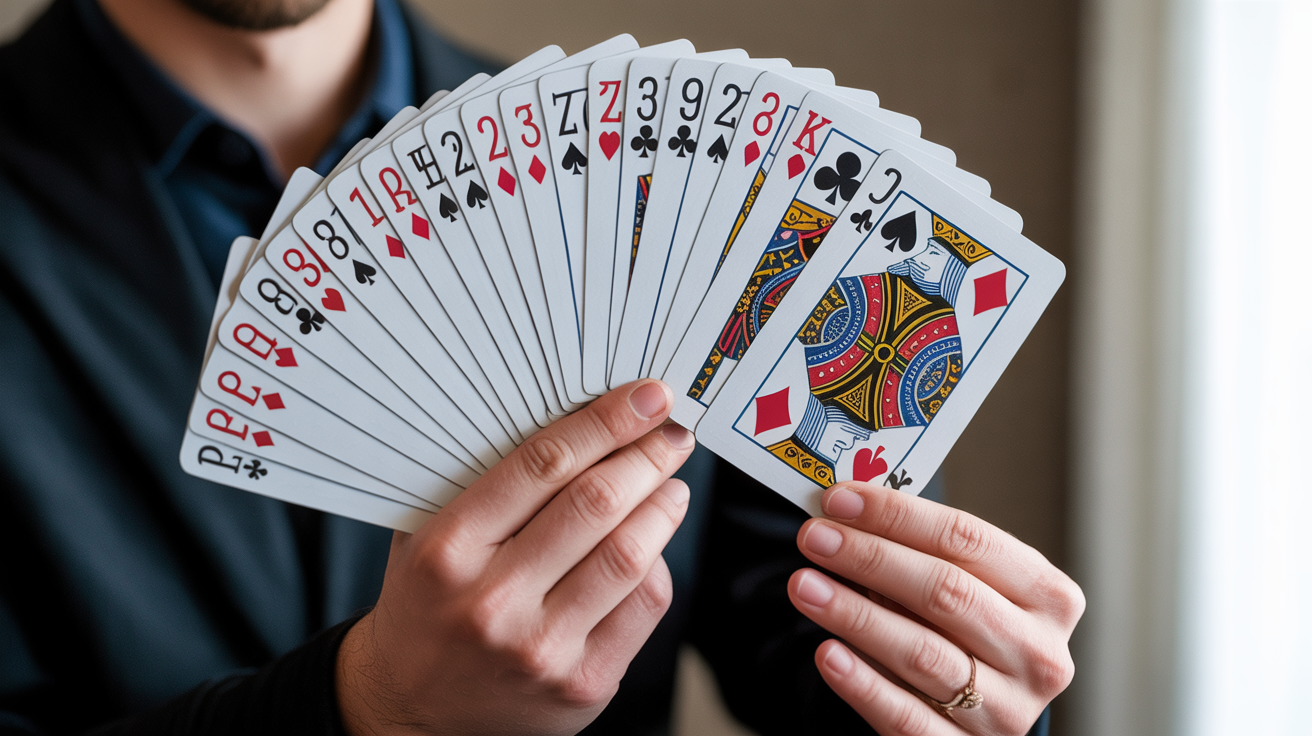
The 21 card trick is probably the first card trick a lot of people ever learned. Someone showed them at a family gathering, or they found it in a library book, and they were floored by how cleanly it worked. The beauty of it is that the math does all the heavy lifting. You just deal, ask a question, and gather, and the deck finds the card for you every single time.
This guide walks through the full method, explains the logic behind it, and gives you some tips for presenting it so the trick feels like genuine mind-reading rather than mechanical card shuffling.
What You Need Before You Start
All you need is a standard deck of cards. No setup, no marked cards, no sleight of hand. This is what magicians call a self-working trick, the method is built into the procedure itself. That makes it a perfect starting point if you are brand new to card magic.
You will use exactly 21 cards from the deck. Set the rest aside face-down where they won't be confused with your working cards. Before you begin, give the 21 cards a casual shuffle so the spectator sees them mixed fairly. Then you are ready to go.
One important rule before anything else: perform this trick once per audience, then move on. The three-deal structure is noticeable if you repeat it, and repeating the trick is the fastest way to tip off a sharp observer. More on that below.
The 21 Card Trick, Step by Step
Dealing the Three Columns
Place the 21 cards face-up on a table in three columns of seven cards each. Deal them the same way you would deal a hand of cards in a card game: one card to the left column, one to the middle, one to the right, then repeat. Work your way through all 21 cards so each column ends up with seven.
The cards should be face-up and spread slightly in their columns so your spectator can see every card. This is important, you need them to identify which column holds their card, and they can only do that if they can actually see the cards.
Now ask: "Tell me which column your card is in." You don't need them to point to the specific card, just the column.
Gathering and Sandwiching
Once they name a column, pick up the three columns and stack them into one face-down packet. Here is the critical step: the column they chose must go in the middle.
To do this, pick up one of the other columns and hold it face-down. Then pick up the chosen column and place it on top of that first column. Finally, pick up the remaining column and place it on top of everything. The chosen column is now sandwiched between the other two, seven cards below it, seven cards above it.
Do not shuffle or cut. Just set the packet down and prepare to deal again.
Round Two: Deal, Ask, Sandwich Again
Deal the cards into three columns again, exactly as you did before. Same method: left, middle, right, repeat, until all 21 cards are dealt out face-up in three columns of seven.
Ask the same question: "Which column is your card in now?"
Gather the columns again the same way, chosen column goes in the middle, sandwiched between the other two. No shuffle, no cut.
Round Three: The Final Deal
Deal a third time. Three columns, seven cards each, all face-up.
Ask one last time: "Is your card in this column, this column, or this column?"
They point. You gather the columns a final time, placing the chosen column in the middle of the other two. Now hold the packet face-down in your hand. The trick is done. Their card is sitting in the eleventh position from the top.
The Reveal
Count down to the eleventh card. You can do this openly or secretly, either way works, depending on how you want to present the climax.
One clean approach: deal the cards face-down one at a time onto the table, counting silently in your head. When you reach eleven, set that card aside without flipping it. Then ask the spectator to name their card aloud for the first time. Flip the card over.
Another approach is to deal the first ten cards face-down in a spread, then dramatically pause before flipping card eleven face-up yourself with a word of your choosing. Find what feels natural for your style.
Why the Math Works
You don't need to understand this part to perform the trick, but knowing it helps you feel confident and teaches you something genuine about self-working tricks using secret math.
When the spectator's column is sandwiched between the other two, the chosen card is somewhere among cards eight through fourteen of the 21-card packet (the middle seven). On the next deal, those seven cards are spread across all three columns. But because of the sandwiching, they land in specific, predictable positions within each column. When the spectator identifies the column again and you sandwich it once more, the chosen card gets pushed closer and closer to the center of the packet.
After three rounds of this narrowing process, the chosen card lands precisely in position eleven, the exact middle of 21 cards. The dealing structure guarantees it every time, with any card, for any spectator. There is no exception to this. It is pure arithmetic.
This is what makes the trick special for a beginner: you can perform it with complete confidence from your very first try, because you cannot make a mistake. You just have to deal accurately and gather in the right order.
Presenting It So It Feels Like Magic
The method is mechanical, but the presentation does not have to feel that way. A few small choices can make this feel genuinely mysterious rather than like an obvious card-sorting exercise.
Have the spectator touch their own card. Before you deal, spread the 21 cards face-down and ask them to touch any card, look at it, and remember it, without showing you. This gives ownership to the spectator. Their card feels more personal.
Slow down the questioning. When you ask which column their card is in, pause. Look at the columns as if you're concentrating. Say something like, "Take a moment, I want to make sure you're certain." A small theatrical beat makes the question feel meaningful rather than routine.
Don't count aloud to eleven. If you count out loud, a curious spectator will realize the card is always in the same position. Count in your head. Let the reveal feel like intuition rather than arithmetic.
Give the reveal some weight. Don't just flip the card immediately. Hold it face-down, look the spectator in the eye, and say something like, "You never said your card out loud. You just showed me a column, three times. Tell me, what was your card?" They name it. Then flip.
Perform it once. This cannot be stressed enough. The trick is obvious on a second viewing if someone is watching for the pattern. If someone asks you to do it again, smile and say you only do it once. That restraint actually makes you seem more mysterious, not less. The best easy prediction tricks for beginners share this quality, they work best when performed with intention and then put away.
Common Mistakes to Avoid
Forgetting Which Column They Named
This sounds trivial, but in the moment it is easy to lose track, especially if there is conversation happening around you. Before you pick up the columns, make a mental note or physically point to the chosen column so you don't confuse it with one of the others.
Shuffling or Cutting Between Deals
The entire trick depends on the packet staying in order after each gather. No shuffles. No cuts. If you accidentally cut the packet, the trick will not work. If you realize you've done this, simply say you want to start fresh, re-deal and re-gather from the beginning, most spectators won't think twice about it.
Dealing the Columns in the Wrong Pattern
Always deal left-right-left-right in the same rotation. If you accidentally deal two cards to the same column in a row, the columns won't have seven cards each, and the math breaks down. Deal slowly and methodically, especially the first few times you practice.
Rushing the Reveal
Counting too quickly, flipping the card without a pause, or explaining the reveal as you do it all flatten what should be a satisfying moment. The card is in position eleven, every time. You have that certainty on your side. Use it to slow down and let the reveal breathe.
FAQ
Does the 21 card trick work every single time?
Yes, as long as you deal accurately and gather the columns correctly each round (chosen column always in the middle). There is no randomness involved. The math guarantees the card ends up in position eleven after three complete rounds.
Can I use a full deck instead of just 21 cards?
The trick requires exactly 21 cards to work correctly. You can pick any 21 from a full deck. Just set the rest aside before you begin and keep them separate so they don't get mixed into your working packet.
What if the spectator forgets which column their card is in?
Ask them to look again carefully before you gather. It helps to give them a moment, "Take your time, I don't want any confusion." If they genuinely cannot tell, you can fan each column toward them to make the cards easier to scan. The trick only fails if they misidentify the column.
Can I do this trick with a child?
Absolutely. This is one of the best tricks to do for younger audiences because the dealing and re-dealing holds their attention, and the payoff is clear and visual. You may want to let them help deal the cards as part of the presentation, it gets them more involved and makes the reveal feel even more personal.
Why can't I just repeat the trick if someone asks?
After seeing the trick once, a curious viewer has already noticed the three-round structure. A second performance gives them a chance to watch for what you're doing with the columns during the gather. The trick is not hard to reverse-engineer once someone is looking for it. Performing it once and moving on protects the mystery, and that is part of what makes magic worth watching.