The Coin Through Hand and Other Quick Illusions
Learn the coin through hand trick and related quick coin illusions. Step-by-step method and presentation tips for beginners.
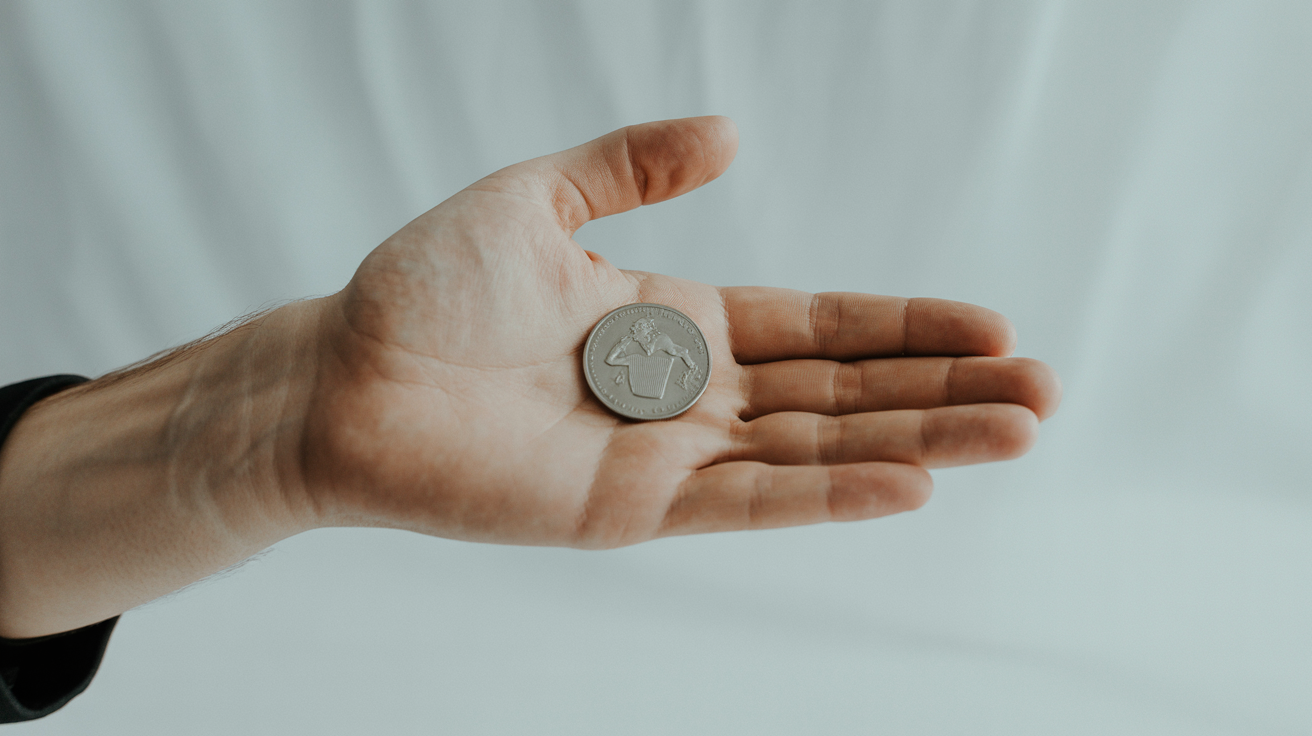
A quarter in your palm, a fist closed tight around it, and then the coin passes clean through solid flesh. Audiences react to coin penetration tricks the same way every time: a sharp intake of breath followed by laughter, because part of them genuinely cannot explain what just happened.
These effects require no gimmicked coins and no special props. What they do require is a clear method, some deliberate practice, and a sense of how to frame the moment. This guide covers the coin through hand trick and two related quick illusions, with enough detail to get you performing within a day or two.
How the Coin Through Hand Trick Works
The coin through hand (sometimes called the coin penetration trick) creates the impression that a coin held in one fist passes upward through the back of that hand and appears on top. The secret relies on a simple, well-timed transfer, not on any sleight of hand that takes years to develop.
The basic setup:
Hold a coin in your right fist, thumb side up. Your left hand hovers above with fingers spread. Tell your audience the coin will travel up through your hand.
The transfer:
This is the core move. As your left hand descends to tap the right fist, you secretly tip the coin upward into your left palm using the fingers of your right hand. Timing is everything. The tap covers the motion, and your audience is watching the "magical" moment of contact rather than the mechanics of your hands.
After the tap, open your left hand and show the coin resting on your palm.
What to practice first:
Spend five minutes getting comfortable with the coin transfer alone, without any presentation or audience. Do it slowly, watch where the coin goes, and speed up only once the movement feels natural. A handheld mirror or a phone camera propped up can show you what the move looks like from the front.
Check out the fundamentals in Coin Magic for Beginners: Your First Tricks if you want to build a stronger foundation before working through this effect.
Presentation That Makes the Trick Land
The method gets the coin from A to B. Presentation is what turns that into a memory.
Before you reveal the coin in your left hand, slow down. Look at your closed right fist, as if concentrating. Some performers tap the fist gently once or twice. Others blow on it, or simply hold the silence for a beat longer than feels comfortable. That pause builds tension, and tension is what makes the reveal satisfying rather than just surprising.
When you open your left hand, do it slowly and face your audience squarely. A quick flash feels like a mistake; a deliberate reveal feels like a moment.
A simple framing line helps: something like "Solid objects have rules. A coin doesn't always follow them." You are not claiming real magic, just setting up a playful premise. Audiences enjoy being in on the fun even when they cannot figure out the method.
The Coin Through Table Variation
The coin through table is one of the most convincing quick coin illusions because the table itself becomes part of the effect. A coin appears to push straight through solid wood and fall into your waiting hand underneath.
The basic method:
Sit at a table with a coin on the surface in front of you. Your other hand rests beneath the table, out of sight. In one smooth motion, you sweep the coin off the edge of the table into your lap (or catch it in your fingers below the edge), while slapping the table sharply with your now-empty hand. The slap provides cover sound, and your hand shape suggests the coin went downward. You then produce the coin from beneath the table.
The sleight here is a misdirection move rather than a technical palm. The sound and motion of the slap draw attention away from the coin leaving the tabletop.
A tip for performing this one:
Do not look at your hands when the transfer happens. Look at your audience, or at the spot on the table where the coin was. Performers who watch their own hands during a coin trick often give the game away through body language alone.
Building a Short Coin Routine
A single coin trick is a moment. Two or three coin tricks in a row, each building on the last, become a routine that people talk about afterward.
A simple structure for a quick set:
| Order | Effect | Why it works here |
|---|---|---|
| 1 | French Drop coin vanish | Establishes the coin is real before anything strange happens |
| 2 | Coin through hand | The penetration effect feels earned after the vanish |
| 3 | Coin through table | Ends on a visual that involves the environment, not just your hands |
Each effect resets the audience's expectation. The vanish says the coin can disappear. The penetration says it can pass through you. The table effect says solid surfaces are no barrier either. By the end, you have built a small arc.
Before linking tricks together, make sure you can perform each one cleanly on its own. Rushing a routine before the individual pieces are solid leads to fumbles, and fumbles are harder to recover from mid-routine than mid-single-trick.
Practicing the Coin Penetration Trick Effectively
Short sessions beat long ones for learning sleight of hand. Fifteen focused minutes of practice produces better results than an hour of half-distracted repetition.
A few practical habits:
- Practice in front of a mirror at first, then switch to a camera. Video catches angle problems you cannot see in real time.
- Do the move slowly until it feels automatic, then bring the speed up. Rushing the learning process introduces bad habits that are harder to fix later.
- Practice coin palming basics alongside this trick. A solid palm technique gives you more options when something goes slightly off during a performance.
- Try the trick on a friend before attempting it in a group. Informal low-stakes performances reveal hesitations you did not know you had.
One common beginner mistake: freezing up right before the transfer moment. If you notice yourself tensing, that tension travels to your hands and affects the smoothness of the move. Take a breath before you start, and keep your hands relaxed throughout.
Frequently Asked Questions
Do I need a special coin for the coin through hand trick?
No. A standard quarter, half dollar, or similarly sized coin works fine. Heavier coins can actually make some transfers easier because they sit more securely in the hand. Avoid very small coins like dimes until you are comfortable with the movement on larger ones.
How long does it take to learn the coin through hand trick?
Most beginners can perform a passable version after thirty to sixty minutes of focused practice. Getting it smooth enough that it looks natural under performance conditions typically takes a few sessions spread over a couple of days. The trick is simple in concept; the practice time goes into making it look effortless.
Can I perform coin penetration tricks for people who know a little about magic?
Yes. Even people who know tricks exist often cannot catch well-timed coin work, because the mechanics happen quickly and the misdirection is built into the natural motion of the hands. A clean transfer at the right moment is hard to detect regardless of how much magic knowledge the viewer has.
What if I drop the coin during the transfer?
Pick it up, smile, and say something like "That one takes a warm-up." Then do it again. Performers who react to mistakes with panic make audiences uncomfortable. A relaxed recovery keeps the mood light and gives you a second attempt that often lands even better.
Is the coin through table trick better for seated or standing performances?
The coin through table works best when seated at a table with spectators directly across from you. Standing versions exist, but they require a different handling and more body concealment. Start with the seated version until you are comfortable, then explore standing variations later if you want to expand the effect.