The Key Card: The Most Useful Beginner Card Principle
Learn the key card principle, the single most powerful beginner card technique. Glimpse one card and find any chosen card every time.
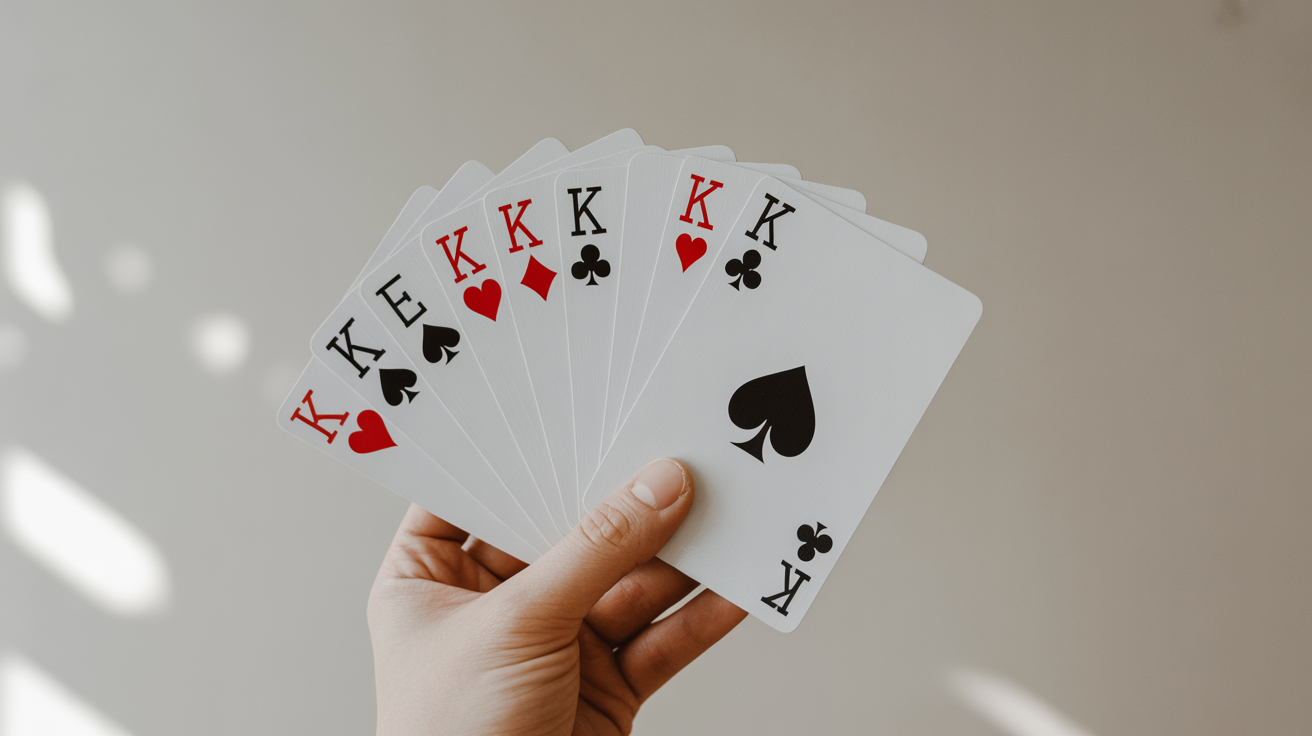
If you could only learn one card technique as a beginner, the key card principle would be the one to choose. It requires no sleight of hand, no memory system, and no gimmicks. A single glimpsed card lets you find any card a spectator names, and you can use it immediately with a borrowed deck. That combination of simplicity and power is rare in magic.
The principle has been a working tool for card magicians for well over a century, tracing back to foundational texts like The Expert at the Card Table, and it holds up because it works. Here is exactly how it operates and how to perform it naturally.
What the Key Card Principle Actually Is
The key card idea is straightforward: you secretly learn the identity of one specific card in the deck. That card becomes your key. When a spectator places their chosen card back into the deck, you arrange things so your key card ends up sitting directly next to theirs. From then on, finding the key card means finding their selection.
The power comes from how invisible this is. The spectator sees a normal card choice, a normal shuffle, and then what looks like an impossible find. They have no reason to suspect you know anything about the deck at all.
Why One Card Is Enough
You might wonder why tracking a single card is sufficient. The answer is position. Once you cut the deck so your key card sits immediately on top of the chosen card, the two are locked together. Spread the deck face-up on the table, scan for your key card, and the card to its right is theirs. One card gives you the whole deck.
How to Glimpse the Key Card Naturally
The first skill to develop is the glimpse: seeing the bottom card of the deck without it looking deliberate. This sounds difficult, but in practice it takes only a few seconds of rehearsal.
Hold the deck face-down in your left hand in dealing position. As you bring the deck up to offer it to your spectator, let your right hand tilt the far end slightly downward for a moment. The bottom card faces briefly toward you. That is your glimpse. You now know the key card.
Making the Glimpse Invisible
The key is misdirection through action. You are not staring at the bottom of the deck. You are gesturing with the deck while explaining what you want the spectator to do, or glancing at them while you speak. The tilt happens as part of a natural arm movement.
Practice this at home in front of a mirror. The glimpse should take under a second and should happen while you are talking or moving. When it feels automatic, it will look automatic.
A second option: after the spectator has shuffled the deck and returned it to you, simply pick it up and look at the bottom card openly. You can frame this as checking the deck is genuinely mixed. Spectators almost never note which card they saw. The directness is itself a disguise.
The Step-by-Step Routine
Here is a clean, practical version of the key card trick you can perform right away.
-
Glimpse the bottom card. Pick up the deck or accept it back from the spectator. Catch the bottom card as described above. This is your key card. Remember it.
-
Offer a free card choice. Spread the deck face-down between your hands and ask the spectator to pull out any card they like. Tell them to look at it and remember it, but not to show you.
-
Split the deck at roughly the middle. Lift off the top half of the deck and set the bottom half on the table. The key card is now sitting on top of the lower packet.
-
Have the spectator return their card. Ask them to place their chosen card face-down on top of the lower packet (the half sitting on the table). Their card now sits directly on top of the key card's former position, meaning the key card will end up directly above it.
-
Complete the cut. Place the upper half of the deck back on top of everything. The deck is now reassembled with your key card sitting directly on top of the spectator's card. The two cards are neighbors.
-
Find the card. You can now spread the deck face-up across the table or ribbon-spread it. Scan for your key card. Their selected card is the one directly to its right (or the one immediately following it toward the face of the deck). Pick it out and place it face-down in front of them.
-
Reveal cleanly. Ask them to name their card. Turn yours over. Done.
Handling the Cut Cleanly
Step 3 and 5 are where some beginners hesitate. The cut should look casual, not calculated. Lift roughly half the deck (it does not need to be exact) and set it to one side. After the card goes in, pick up that upper half and drop it on top. Do not count cards, do not look at the deck nervously. The more relaxed you are at this point, the more relaxed your spectator will be.
Presentations That Strengthen the Effect
The bare mechanics work fine, but a good presentation makes the trick genuinely surprising rather than just successful.
The delayed reveal. After reassembling the deck, do something else entirely for thirty seconds. Shuffle the deck. Talk about the nature of memory. Then find their card. The gap between replacement and revelation makes it harder for the spectator to reconstruct the method.
The face-down deal. Instead of spreading the deck, deal cards face-down onto the table one at a time, watching the spectator's face. Slow down as you near your key card. Turn over the card that follows it. Presenting the find as a moment of reading their expression rather than knowing the deck shifts attention away from the cards themselves.
The elimination game. Tell the spectator you will deal through the deck and they should keep a "poker face." Claim you will stop when you feel their reaction change. Deal steadily, pause just before their card, and pull it out. This framing turns a card location into a demonstration of observation. It is more interesting to watch and harder to reverse-engineer.
Whatever presentation you choose, keep the language simple and specific. "Think of your card" is better than "hold the mental image of your chosen card clearly in your mind." Plain instructions sound more confident.
Common Mistakes and How to Avoid Them
Most beginners run into a few predictable problems with the key card. Knowing them in advance saves a lot of trouble.
Losing the key card. If the spectator shuffles after replacing their card, the key card moves and the method fails. Do not offer further shuffles after the selection goes back. If they reach for the deck themselves, gently take it first and say you will handle it from here.
Looking at the deck when you spread it. Train yourself to begin the spread before you start hunting. Looking at the deck at an angle, or hesitating before you spread, signals that you are searching. The spread should open confidently, and the key card should practically jump out at you after a few practice sessions.
Forgetting the key card. This happens with nerves. The moment you glimpse the bottom card, anchor it with a quick mental note: say it silently once or twice as you extend the deck for the choice. By the time they have pulled a card, it should be locked in.
For more on building a complete beginner card set, see card tricks for beginners: where to start. If you want to explore effects that work without any sleight of hand at all, self-working card tricks are a good companion to this principle.
Why This Principle Matters
The key card is not just one trick. It is a way of thinking about card magic. Once you understand that a single piece of hidden information can unlock an entire routine, you start seeing how other methods work by the same logic. The double lift, forces, and controls are all variations on knowing something the spectator does not.
More practically, the key card lets you perform a convincing card mystery with any deck, anywhere, after five minutes of practice. That is a powerful position for a beginner. You can sit down at a table, borrow a deck, and do something genuinely astonishing. No setup, no props, no rehearsal beyond learning the steps above.
Magicians have built full performing acts around variations of this principle. The version here is the foundation. Once you can execute it smoothly (glimpse, split, replace, cut, find) you will have the scaffolding to build far more elaborate routines on top of it.
Practice the glimpse tonight. Run through the routine ten times with a real deck. By the eleventh time, it will feel natural enough to show someone.
FAQ
Is the key card principle hard to learn?
No. The steps themselves are simple, and there is no difficult sleight of hand involved. The main skill is making the glimpse look natural, which comes quickly with a little mirror practice. Most beginners can perform a basic version of this within a single evening.
What if the spectator cuts the deck after replacing their card?
A single complete cut does not destroy the key card principle. A cut only moves the break point of the deck; your key card and their card remain adjacent. Multiple random cuts or a genuine shuffle will separate them, so your goal is to keep control of the deck after the replacement. You can avoid further cuts by moving smoothly to the next phase of your presentation.
Can I use the key card with any deck?
Yes. Any standard 52-card deck works. There are no special cards, marks, or preparations required. This is one of the reasons the principle is so useful: you can borrow a deck from the table at a dinner party and perform immediately.
How do I make the find look impressive rather than mechanical?
Build your presentation around something other than "I will find your card." Frame it as reading your spectator's reactions, following a feeling, or trusting intuition. The more you make the reveal about something human rather than something technical, the more impossible it seems. Practice saying your presentation out loud until it sounds like conversation rather than script.
Should I tell people how this works?
No. The method's value comes from the spectator not knowing it. Part of being a good magician is keeping what you learn to yourself, performing for people who have not seen the effect, and not repeating the same trick for the same audience. The principle is worth protecting because it will keep working for you as long as it stays a secret.