What Coins Are Best for Coin Magic?
Find out which coins work best for coin magic, why size and weight matter, and what beginners should start with before moving to specialty coins.
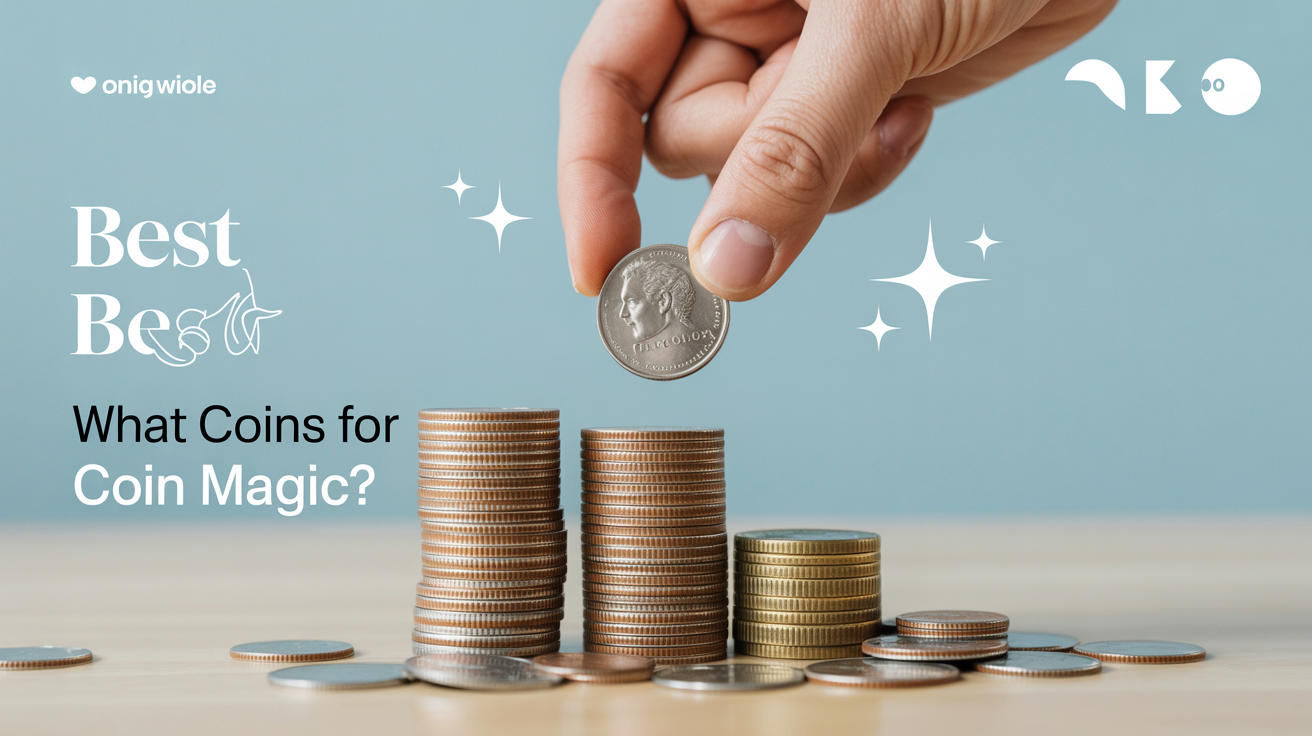
Every coin magician has an opinion on the perfect coin. Ask ten performers and you will get ten different answers, but the underlying reasons they give are surprisingly consistent. Size, weight, and sound all play a role. So does what your audience expects to see. This guide walks through the main options so you can make an informed choice rather than guessing.
Why the Coin Itself Matters
A coin is your primary prop in coin magic, so its physical properties affect everything. A coin that is too small disappears before your audience can register it. A coin that is too light feels unimpressive when it lands in someone's hand. A coin that catches sound at the wrong moment can expose a move.
The ideal coin for sleight of hand tends to be large enough to see clearly from a few feet away, heavy enough to feel solid, and proportioned so it sits naturally in a palm or between fingers without needing awkward adjustments.
Edges matter too. Milled (ridged) edges give you a tactile reference point that helps during palming and retention moves. Smooth-edged coins tend to slip, which is a problem when precise control is the goal.
The US Half Dollar: Why Professionals Favor It
The half dollar is the traditional standard in American coin magic, and its reputation is well earned. At roughly 30 millimeters in diameter, it is large enough to see but small enough to palm without straining an average adult hand. Its weight feels authoritative, and it produces a clean sound on a table or against another coin.
Historically, the Kennedy half dollar has been the go-to choice for coin magic for beginners. It is widely available, genuine currency, and familiar to audiences, which matters more than most beginners expect. When an audience sees a recognizable coin, they start with a sense of fairness. They know what a half dollar looks like, so any transformation feels more impossible to them than if you used a prop coin they have never handled.
For coin palming basics, the half dollar is particularly forgiving. Its size means less precision is required to maintain a palm, and the extra weight keeps it seated in the hand even during natural movement.
The main drawback is availability in everyday circulation. Half dollars are technically still minted, but most people never see them in change. You may need to pick some up at a bank. Ask for a roll of Kennedy half dollars and you will have a reliable supply.
What Beginners Can Use Right Now
You do not need specialty coins to start learning. A few options work well for early practice:
US quarters. Quarters are common, consistent, and roughly the right size for building hand strength and technique. They are smaller than half dollars, so moves that work cleanly with a quarter will feel easier to execute when you upgrade. Many beginners spend months practicing palming with quarters before transitioning.
US half dollars. If you want to jump straight to the most practical performance coin, get a handful of half dollars from your bank. They are cheap, durable, and standard for a reason.
Coins of similar size from other countries. Some performers prefer the British 50 pence coin, the Canadian 50-cent piece, or other large-denomination coins from their home country. The logic is the same: familiar, large, and substantial. Use whatever your local audience recognizes.
Practice coins. Specialty magic shops sell practice coins made of a heavier alloy than standard currency, sometimes with a slightly larger diameter. These are useful for building grip strength but are not necessary to begin. Learn with real coins first.
A note on coin sets: matched coins (where multiple coins look identical) become important for certain routines, but that is something to think about once you have a few core moves working. Learning the French drop coin vanish and other foundational sleights can be done with a single coin.
Size and Weight at a Glance
| Coin | Diameter | Relative Weight | Good For |
|---|---|---|---|
| US dime | 17.9 mm | Light | Not recommended for beginners |
| US quarter | 24.3 mm | Medium | Practice and learning |
| US half dollar | 30.6 mm | Heavy | Performance, palming, standard routines |
| US silver dollar | 38.1 mm | Very heavy | Visual impact, large-hand performers |
| British 50p | 27.3 mm | Medium-heavy | Good alternative for UK performers |
The dime is generally too small and too light to work well for beginners. The silver dollar is impressive visually, but its size makes palming difficult for smaller hands. Most beginners land on the quarter for practice and the half dollar for performance, and that approach has been consistent across generations of learners.
Specialty and Gimmick Coins
Eventually you will encounter gimmick coins in magic shops and online catalogs. These include shells (hollow coins that fit over a solid coin), expanded shells, scotch and soda sets, and various coin-through-object gimmicks. They can produce effects that look genuinely impossible.
The advice from working performers is consistent: learn with real coins first. The sleight of hand you build with genuine currency transfers directly to gimmick work. A magician who understands coin palming basics for beginners will get far more out of a shell set than someone who relies on the gimmick to do all the work.
Gimmick coins are also calibrated to match specific genuine coins. A half dollar shell is designed to match a genuine US half dollar. If you start with half dollars, your gimmick collection will stay consistent and interchangeable.
Frequently Asked Questions
Can I use foreign coins for coin magic? Yes, with one consideration: use coins your audience will recognize. Performing for a US audience with an unfamiliar foreign coin removes some of the fairness that makes coin magic convincing. If you perform in multiple countries, having a dedicated coin for each region is worth the small investment.
Do I need to polish my coins? A lightly tarnished coin looks more real than a mirror-shined one. Audiences are slightly suspicious of props that look too perfect. Clean your coins enough that they are presentable, but do not worry about getting them to a collector's grade shine.
Are silver coins better than modern clad coins? Older silver half dollars (pre-1971) are popular among collectors and some magicians because of their weight and sound. They are heavier than modern clad versions and produce a distinctive ring. However, genuine pre-1971 halves can be expensive to acquire in quantity. Modern Kennedy halves work fine for learning and performance.
How many coins do I need to start? Six matching coins is enough to learn most beginner routines and build a small repertoire. Three is enough to start practicing individual sleights. You do not need a large collection before you begin.
Where do I buy half dollars? Ask at the teller window of any US bank. Most branches can provide a roll of 20 half dollars from their coin supply. Credit unions are sometimes better stocked than major banks. Online coin dealers and eBay are also options, though buying from a bank is easiest and least expensive.