3 Self-Working Card Tricks That Fool Everyone
Three self-working card tricks that require no sleight of hand, complete with method, script, and presentation tips for beginners.
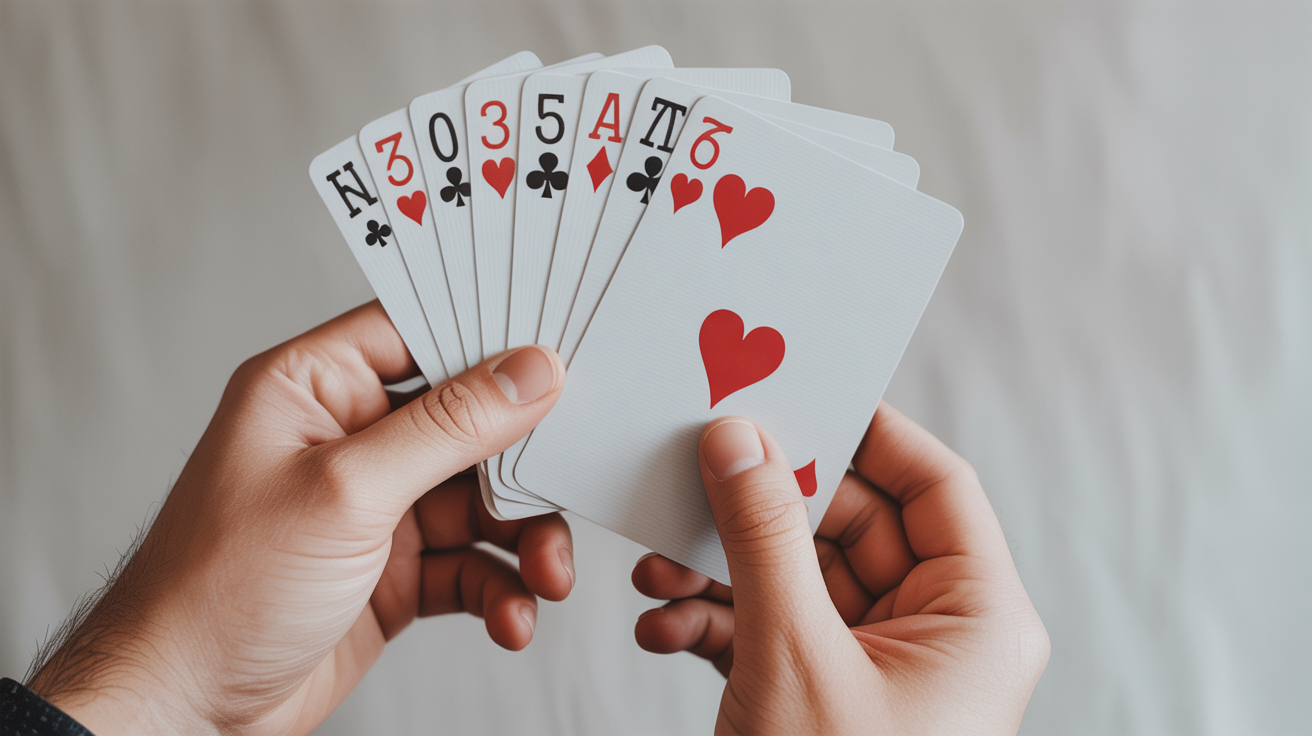
Some of the most fooling card tricks in existence work entirely on their own. No palming, no false shuffles, no years of practice. You simply follow a procedure and the math, memory, or structure of a standard deck does the rest. These are called self-working card tricks, and they are genuinely the best place to start your card magic journey.
The three tricks below have been fooling audiences for decades. Each one has a clean method you can learn in an afternoon and a presentation angle that makes it feel like real mind-reading.
What Makes a Trick "Self-Working"
A self-working card trick relies on a mathematical, memorization, or structural principle rather than any physical skill. The cards arrive at the right place because of how numbers or sequences behave, not because you secretly moved anything. "Automatic card tricks" and "no skill card tricks" are just other names for the same idea.
This does not mean they are boring or obvious. Most laypeople have no idea these principles exist, so a well-performed self-worker can be more mystifying than sleight-of-hand routines that required hundreds of hours of practice.
If you want to understand one of the most useful concepts in card magic before diving in, read about the key card, the most useful beginner card principle. It is not required for the tricks below, but it will open a lot of doors once you understand it.
Trick 1: The 21-Card Trick
This is one of the oldest and most reliable no skill card tricks in the book. The method is airtight, and if you add a strong presentation, audiences will be completely baffled.
What Happens
A spectator mentally selects one of 21 cards. You deal them into three face-up columns of seven cards each. The spectator tells you which column their card is in. You repeat this process three times total. Then you name, reveal, or find their card.
The Method
- Count out 21 cards from the deck and set the rest aside.
- Deal the cards face-up into three columns, left to right, row by row. You will have three columns of seven cards.
- Ask the spectator to silently note their chosen card and tell you only which column it is in.
- Pick up the columns one at a time, placing the selected column between the other two as you gather them. This is the only step that matters: the chosen column always goes in the middle.
- Deal the cards into three columns again, same way as before.
- Ask again which column their card is in. Pick up again with the selected column sandwiched in the middle.
- Do this a third time. After the third gather, the chosen card will always land in position 11, which is the middle card of the 21.
Presentation
Do not reveal that the card lands in the middle. Instead, count silently to yourself as you deal the final columns, note which card is eleventh, and reveal it dramatically. You can say you are reading their body language, watching their eyes, or sensing the energy in the deck. Any of those framings work.
Add a false cut between deals if you like the look of it. The cards will still behave correctly.
Trick 2: The Four-Heap Clock
This trick feels like a memory feat but requires nothing of the sort. It is one of the cleanest easy self-working card tricks for one-on-one performances.
What Happens
You set up what looks like a chaotic arrangement of cards on the table. A spectator touches any face-down heap, and you reveal the card on top.
Setup and Method
- Before the trick, secretly look at the bottom card of the deck and remember it. This is your key card.
- Ask the spectator to give you a number between ten and twenty. Whatever they say, deal that many cards one at a time onto the table (this reverses the order), then pick them back up.
- Add the two digits of their number together. If they said fourteen, that is 1 + 4 = 5. Count down that many cards from the top and remember the card at that position. That card is their selection, though they do not know it yet.
- Continue dealing cards into four face-down heaps in a cross or clock pattern, talking casually as you do.
- Ask them to point to any heap. Turn over the top card of that heap.
The method here actually uses a subtler structure than it first appears, and you may want to experiment with a few versions. Many performers use a key-card position to track the selection. Either way, the core lesson is the same: a spectator's free choice can be controlled by arithmetic.
Trick 3: Telephone Telepathy
This trick works over the phone, which gives it an almost supernatural quality. It is one of the few automatic card tricks that can be performed without the spectator in the room.
What Happens
You call a friend, hand your deck to someone else in the room, and still identify the card they choose.
The Method
This one uses a mathematical property of a standard 52-card deck combined with a simple counting principle.
- Before the call, arrange the top ten cards in a known order. Any order you can remember works. A simple option is Ace through Ten of the same suit.
- When you perform, have the spectator cut the deck and complete the cut. Then have them deal cards face-down from the top until they want to stop, take that card, and remember it.
- The key is that the spectator tells you how many cards they dealt before stopping. Because you know what the top ten cards were, you can calculate which card they are holding.
This version requires you to pre-set ten cards, which is minor preparation. The effect is that you identify their card while you are in another room, on a phone, or even through a wall. That perceived impossibility is what makes audiences remember it.
Tips for Performing These Tricks Well
Before you perform any self-working trick, keep these points in mind:
- Practice the patter first. The method is the easy part. Knowing what to say while you execute it is what separates a confusing demonstration from an actual performance.
- Never repeat a trick for the same audience. If someone sees the procedure twice, they start to figure it out.
- Let the effect breathe. After the revelation, do not immediately explain or move on. A beat of silence lets the moment land.
- One trick is enough. A single well-performed self-working card trick leaves more of an impression than three rushed ones.
For more on building a first card routine, see card tricks for beginners, where to start. That guide covers how to sequence tricks and how to handle the moments between them.
A Note on the Magician's Code
Self-working tricks are not "lesser" magic, but they are widely known in the magic community. Part of the craft is choosing who you perform for and keeping the method private. Do not explain how these work after you perform them. The mystery is part of the gift.
If you want to learn how performers control which card a spectator picks, a simple card force is a natural next step and pairs well with any of the tricks above.
Frequently Asked Questions
Do self-working card tricks look fake or gimmicky?
Not if you present them well. The method is invisible to people who do not know how these principles work, which is nearly everyone. A strong, confident presentation will make a self-working trick look exactly as impressive as one requiring sleight of hand.
Can I perform these for people who know card magic?
More experienced hobbyists may recognize some methods, particularly the 21-card trick. For general audiences, these are more than strong enough. If you want tricks that fool magicians, that is a different category entirely and not where beginners should focus their energy.
How do I handle it if someone asks to see the trick again?
Decline gracefully. A simple "I only do it once, otherwise it loses the magic" is honest and professional. This applies to every trick, not just self-workers.
Do these work with any deck of cards?
Yes. A standard 52-card deck with no jokers is all you need for every trick in this guide. No special decks, marked cards, or gimmicks are required.
How long does it take to learn these?
You can learn the method for each trick in under ten minutes. Getting comfortable enough to perform them smoothly for real people takes a bit more practice, mostly on the patter and timing. A few run-throughs in front of a mirror or a phone camera will tell you when you are ready.