The Glide: A Classic Card Sleight for Beginners
Learn the Glide, a classic card sleight where you secretly hold back the bottom card and deal the one above it instead. Grip, motion, and two tricks.
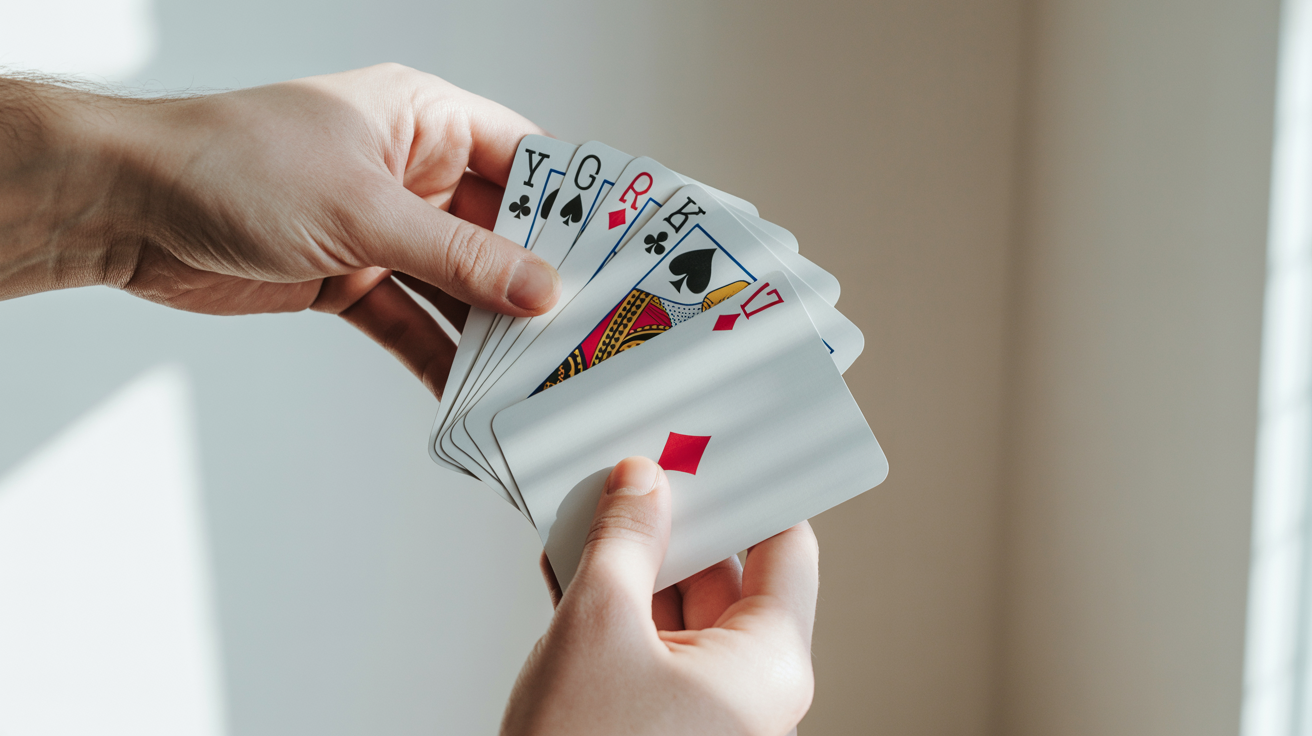
The Glide is one of the oldest card sleights still in regular use. The effect looks simple: you hold the deck face-down and deal the bottom card onto the table. But the card that actually lands there is not the bottom card at all. You kept that one back and slid the one above it forward instead. The spectator never sees the switch happen.
That deceptive simplicity is exactly why the Glide belongs in a beginner's first handful of moves. It requires no special grip strength, no years of practice, and no expensive equipment. A single standard deck and a few minutes of focused work are all you need. By the end of this guide you will understand the mechanics, know how to keep the move invisible, and have two complete tricks you can perform the same day you learn it.
The Mechanics of the Glide
The Glide works because the bottom card of a face-down deck is already hidden from the audience. All you need to do is prevent it from coming forward while a different card takes its place. The pull-back motion is small and stays tucked under the deck where no one can see it.
Here is how the grip and motion work together.
Starting grip. Hold the deck face-down in your dealing hand with your four fingers along the left long edge and your thumb resting lightly along the right long edge. Your fingers should curl slightly under the deck so that your fingertips can reach the face of the bottom card. This is sometimes called the Mechanic's Grip, and it is a comfortable natural hold that looks normal from the audience's side.
Reaching under. When you are ready to execute the move, let your middle and ring fingers slide under the deck and touch the face of the bottom card. Your index finger stays on the edge for support. Your thumb does not move.
The pull-back. While keeping the deck still and your expression neutral, draw the bottom card back toward your wrist by about an inch using those middle and ring fingers. You are creating a gap. The second-from-bottom card is now the one sitting at the front edge of the deck.
Dealing the second card. Use your free hand to reach under and slide out what appears to be the bottom card. You are actually pulling out that second card. Hand it to a spectator or place it on the table.
Releasing. Once the second card is clear, let the bottom card slide forward again with a gentle relaxation of your fingers. The deck looks exactly as it did before.
The entire pull-back and deal happens in one fluid movement. Practice the motion slowly until it feels natural, then gradually bring it up to a normal dealing speed. The action should take no longer than a single second.
Keeping the Move Invisible
Mechanics alone do not make a move invisible. Angles, timing, and presentation do most of the work.
Hand angle. Tilt the deck slightly downward toward the table so spectators are looking at the back of the deck rather than the gap underneath it. A small tilt of ten to fifteen degrees is enough. If someone is seated directly to your side they might see the pull-back, so work facing your audience with no one to your far left or right.
Keep your hand still. The most common mistake beginners make is moving the entire hand during the pull-back. Only your middle and ring fingers should move. If your wrist dips or your elbow pulls back, the motion becomes visible from the front. Practice in front of a mirror with your hand perfectly still while your fingers do the work underneath.
Time it with speech. The moment of action is a good place to say something to your spectator. Something as simple as "keep your eye on this card" gives them a reason to look at their hands or the table rather than at the deck. You are not trying to distract them in a showy way; you are just filling the moment with something natural so the small motion underneath stays unnoticed.
Go slowly at first. Speed comes from repetition, not from forcing it. A slow, clean move is harder to spot than a fast, tense one because tension shows up in your shoulders and face before your hands.
Two Tricks You Can Perform Today
Learning a sleight is only half the work. Putting it inside a trick with a clear beginning, middle, and end is what makes it useful. Here are two tricks built around the Glide that are simple enough to perform after an hour of practice.
The Wrong Card
Effect. A spectator names any card. You deal what appears to be the bottom card face-down onto the table. They name the card again and you flip it over to reveal that you got it right, even though they never touched the deck.
Method. Before you start, secretly peek at the bottom card of the deck. Ask the spectator to name any card. Whatever they say, you will simply say you think the bottom card is their card. Reach under and execute the Glide, but this time do NOT release the bottom card afterward. Instead, turn it face-up and show it to them as the "wrong guess." Then dramatically deal it face-down. When they flip it over, it is the bottom card you peeked. You named it correctly. The card you dealt in the Glide moment was just set aside and ignored.
This sounds complicated but it works because the spectator is focused on what card they said, not on whether you dealt once or twice.
Peek and Predict
Effect. You write a prediction on a piece of paper and place it face-down. You deal three cards onto the table and ask the spectator to choose one. You flip your prediction to reveal the name of the card they chose.
Method. Peek the bottom card before you begin. Write its name on the paper. Now hold the deck face-down and deal three cards. Use the Glide on the first deal so you deal the second-from-bottom card, then deal the real bottom card second, then deal a third card normally. Your prediction card (the bottom card) is now in the center position.
When the spectator picks a card, they will choose freely. If they pick the center card, your prediction is correct. If they pick either of the other two, use one of two classic outs: "Set aside the ones you didn't choose" and reveal the one remaining, or ask them to "eliminate one more" until the correct card is the last one standing. This type of force-and-out combination has been used in card magic for well over a century.
Frequently Asked Questions
How long does the Glide take to learn? The basic pull-back motion is learnable in a single session of focused practice. Getting it smooth enough to perform in front of people usually takes a few days of regular repetition, ten to fifteen minutes at a time. You are building muscle memory, so consistency matters more than marathon practice sessions.
Do I need a particular type of deck? A standard poker-sized deck works well. New cards can be slippery, which actually helps the pull-back motion. If your deck is old and sticky the cards may drag rather than slide cleanly. A light application of card conditioner can help, but simply using a reasonably fresh deck is usually enough.
What if someone asks to see the bottom card? This is a real concern and a good reason to use the Glide inside a trick where revealing the bottom card would be part of the effect, rather than as a standalone demonstration. If a spectator asks to see it, you can simply show it and restart or acknowledge the moment humorously. Most spectators do not ask because they have no reason to suspect anything is happening.
Is the Glide related to the Double Lift? They serve different purposes. The Double Lift involves showing two cards as one from the top of the deck. The Glide involves secretly substituting a card from the bottom during a deal. Learning both opens up a much wider range of effects than either one alone.
Where should I go after learning the Glide? The Glide fits naturally alongside other foundational moves. If you have not worked through basic sleight of hand concepts yet, that is a good next step for context. From there, palming adds another tool for concealing cards and objects. If you are just getting started with card tricks overall, the beginner card tricks guide covers a range of effects that require no sleight of hand at all, which makes for good contrast as you develop your skill set.